References: Acts 7: 55 – end | 1 Peter 2: 2 – 10; John 14: 1 – 14

I was greatly cheered during the week. We have an ongoing debate in our house about the merits of butter versus low fat spread. I am a butter man and have never been converted to the dubious delights of the paler more insipid alternatives, which despite every attempt to the contrary, I can believe is not butter. My father-in-law, who routinely sits next to me at breakfast, has been schooled in years of how much easier it is to get low fat spread out of the plastic disposable container it comes in than hard butter out of a butter dish, and how actually he can’t taste the difference, once he lathered it thickly with marmalade. This leads to healthy debates which have not yet descended into fist fights.
But on the news on Wednesday was the music to my ears that butter is actually now thought to be better for you than low-fat alternatives because it contains so much less processed food.
Now I just need to be told that a pint of bitter is healthier than a glass of water and my life will be complete.
Where in our readings this morning did you hear about nourishing sustaining food, and what did it say?
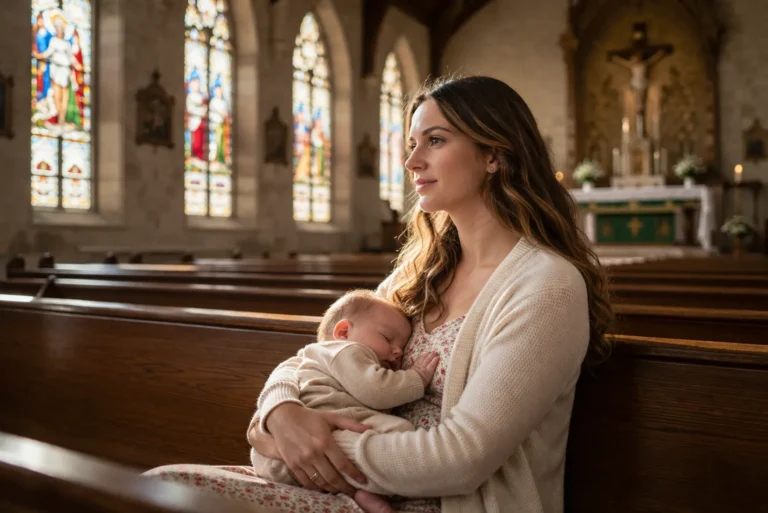
The answer is our second reading from St Peter’s first letter. We heard ‘Like newborn infants, long for the pure, spiritual milk’. Do you remember hearing this quote from the bible before? For some reason it sticks in my mind but I’m not sure I’ve ever considered what this pure spiritual milk might be. So for my benefit just as much as yours, that’s where we’re going today.
What is quite clear is why we need pure spiritual milk because St Peter finishes the quote like this, ‘Like newborn infants, long for the pure, spiritual milk, so that by it you may grow into salvation’. So whatever this spiritual milk is, it’s essential if we want to grow fit and healthy in our relationship with God. Salvation from the poor and sickly life we lead without God.
Because that’s what it is. Life without God is highly likely to be self-centred, or at least centred around our own families and concerns, and there’s only a very small percentage of people for whom this is not true. I challenge you to think of more than a handful and these are likely not to be people you know personally.
Life without God leaves only ourselves to please, so what is wrong with buying things because we think we deserve it, or because we think it will make us feel better, or simply because we can? Life without God leaves us having to fend for ourselves because who else can we fall back on, so it is prudent to put ourselves first, to invest our money for instance, without considering too deeply whether it is being used to support unjust regimes or climate destroying companies. Life without God takes away absolute moral restraints so for instance it is easier to feel justified in saying what you want without considering the effect of shouting at someone else, or hurting someone else, ignoring someone else. Life without God makes huge present day challenges like the Climate Crisis seem hopeless because human beings don’t seem to be grappling soon enough with the challenges they are facing.
And it doesn’t take a genius to notice that anyone living like this is unlikely to feel healthy in their relationships with others, or hopeful about the future, or even content with what they’ve got very easily.
Quite apart from having anything to do with what happens when we die, growing into salvation makes all the difference in the world to how we feel and live and act today and the health and vitality of our relationships, our lifestyle and our dreams.
And St Peter is saying that in order to attain this we need ‘pure, spiritual milk’. And in my experience this is not something we can get by simply clicking on in our weekly supermarket online shop.
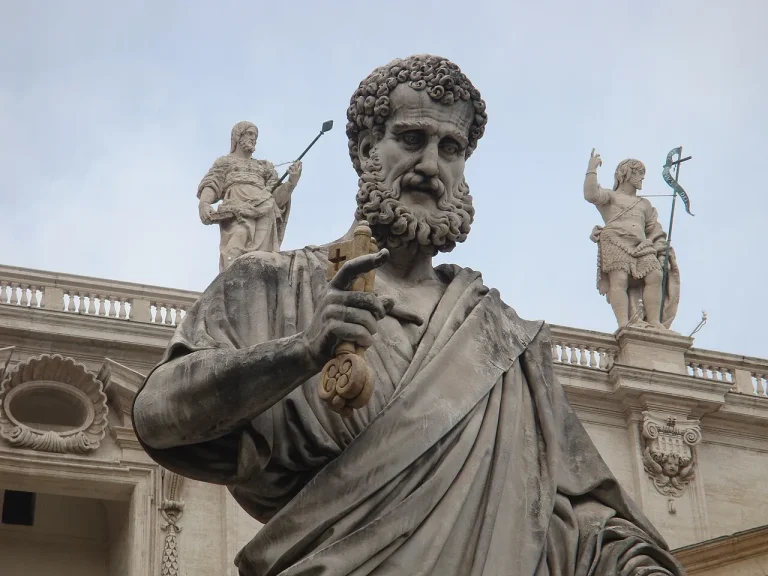
St Peter, the great and fallible disciple of Jesus, who knew Jesus really well and was also very well aware of his own historic failings. Perhaps especially his denying Christ three times and Jesus’s loving acceptance and forgiveness after the resurrection. The resurrection which Peter was one of the first people to witness. This is the same Peter whom Jesus predicted was going to be a rock on which his Church was to be built, would have authority to forgive or retain sins and would end up being martyred. Remember his conversation with Jesus on the beach right at the end of John’s Gospel when Jesus says, ‘ when you grow old, you will stretch out your hands, and someone else will fasten a belt around you and take you where you do not wish to go.’ (He said this to indicate the kind of death by which he would glorify God.) It is likely that Peter wrote this letter after he had been transported as a prisoner to Rome and shortly before he was executed during Nero’s vicious persecution of the Christians there in AD65. So quite a uncertain and dangerous setting and Peter was writing to other Christians dispersed around the Roman empire, many of them in small isolated communities, newly converted to the faith and facing persecution from the society around them.
It’s unlikely that many of us here will feel quite so up against it and beleaguered either as Peter facing Nero in Rome or the small isolated communities of Christians around the empire facing discriminatory persecution, but it is highly likely that each of us here will be facing challenges of some sort or another which make us distracted and uncertain, both of ourselves, our future and our faith. It may be health challenges, or the frustrations of getting older, financial pressures, or worry about people we love, or even questions about the point of going to church in an age which seems to ridicule and point the finger at people of faith. In that sense Peter is speaking to each one of us and saying ‘Go back to basics. Don’t try to be too clever in the way you reason out your faith. Just seek the pure spiritual milk of nourishing goodness.’
So what are the basics? Well the fallible and all too human St Peter knows Christ loves him with an enduring love that rises far above and far deeper than his many sins, faults and failings. He knows that Jesus has stuck with him through his confused and broken attempts at following. He knows that Jesus is more at home with failure and brokenness than he is with success and self-assurance and he has an uncanny knack of being able to transform this failure and brokenness into valuable new beginnings and hope. And he knows that Jesus did this most dramatically in his own death and resurrection, and he knows that he did it most personally in his, Peter’s, own life.
The pure spiritual nourishing sustaining simple truth that is the milk of the Gospel is focussed solely on Jesus. His death and his resurrection and the difference it makes. It made all the difference in the world to Peter. It made all the difference in the world to Stephen in our first reading as he faced a torrent of death dealing stones and still managed to pray, ‘Lord, do not hold this sin against them.’ And it makes all the difference in the world to you and me in whatever challenges we are facing in 2026. It proves that we do not have to bear these challenges on our own and indeed it we want to see them transformed into hope and new beginnings we do best to pin them to the cross of Christ and look eagerly for the light of resurrection. And like St Peter and St Stephen the transformation starts now in the way we can face life which seems only to lead to disaster and disappointment. Both these early Christians demonstrated that, St Stephen in his last words alive and St Peter, just before he died, in his letter full of hope and new beginnings to persecuted Christians.
Indeed Stephen and Peter were and are, living stones of faith, fellow Christians, focussed upon Christ whose faith has irrefutably affected their lives and the lives of those around them, including you and me.
So ‘Come to him, a living stone, though rejected by mortals yet chosen and precious in God’s sight, and like living stones, let yourselves be built into a spiritual house, to be a holy priesthood, to offer spiritual sacrifices acceptable to God through Jesus Christ.’ St Peter was writing to early persecuted Christians in danger of being overrun by the cares of the world and the weight of all this on their shoulders. He was urging them to let Christ take that weight and to see what happened. And it seemed to have worked. The Church in those areas survived rather against the odds and their hardship and problems transformed to growth and stability in a broken Empire. It’s not that their worries and significant challenges went away. They didn’t. It rather that the resurrected life of Christ enabled them to have a sure hope in difficult circumstances. And their daily lives clearly took on a new meaning and direction as they strove to live with Christian values and beliefs in an aggressively antagonistic world.
I don’t know if you can identify with any of that, either the problem or the solution but the advice is clear. If you want to be a living vibrant stone in the building where Christ is the cornerstone, then seek the pure spiritual milk that is the simple truths of the Gospel and keep that, the person of Jesus in the forefront of everything that you do.
I’ll give you a rather topical example.
Several of you have talked to me over the last few months of the challenges facing this Church because of the repairs needed to the church roof. As I understand it they are substantial. An increasingly leaky roof. Tens or even hundreds of thousands of pounds and a Church that struggles to pay its way. It’s easy to think it is too much to expect for a small congregation to be able to rise to this challenge. It’s easy to think that someone else: the village, the Church Commissioners, the diocese?, should step in and sort it out. It’s reasonable to feel exhausted and inadequate when faced with such a huge challenge. It’s easy even to question whether it’s even a good use of money when there so many needy people in the world. Perhaps the money could be better spent on feeding the hungry?
It’s times like this when it is so important to start drinking the pure spiritual milk of the Gospel and allow the new hope of the risen Jesus to transform your lives and allow you to dream and hope. That gives you the energy you need to do what you have to do and to make a lasting contribution to the presence of faith in this community.
And when you do, that’s another example of how St Peter’s words about Jesus have indeed changed the world and you have been part of it.
Whether or not this is a pressure of life you are exercised about or whether it’s something else entirely, ask yourself the question, ‘Where am I going to seek pure spiritual milk this week?’ And then offer it to Jesus in a prayer.
Amen.