References: Acts 2: 14a, 22 – 32; John 20: 19 – end


Risen Lord Jesus, as we see your wounded hands and feet, breathe on us with your Holy Spirit and enable us to challenge a wounded and hurting world. Amen.
A certain prominent world leader talks a lot about ‘fake news’. Without wanting to make any sort of value judgement at all – of course not – he seems to include nearly anything in this category that doesn’t suit his particular purpose of the moment.
Thomas the disciple clearly felt that the other ten apostles’ claims that they had seen the risen Jesus was fake news. How could it be true? Dead crucified pseudo-Messiahs don’t have a habit of walking and talking again once they have been sealed in a tomb. Even if that tomb has been desecrated.
If fact it isn’t a huge leap of faith to jump from a dead Jesus to a belief that claims that he was a Messiah at all were fake news as well. And the one thing Thomas did know was that Jesus was dead.
Do you think Thomas felt betrayed by Jesus? All that talk about changing the world had come to nothing. His naturally depressive personality was dragged down even further and he felt without hope, without direction, without meaning.
And if they had seen him, why hadn’t he appeared to Thomas as well? It wasn’t Thomas’ fault he’d missed being with the disciples on that last and first Sunday. He’d been tired and fed up and he hadn’t wanted to get out of bed. And when he did he didn’t feel equal for human company. He just wanted to be on his own. To wallow in his own fed-up-ness.
You can make whatever personal connections you want with this, but I guess I’m not alone when I look at the state of the world, and the rise of self-publicist international leaders and the increasing tension and de-stability of world politics and of course not least the terrifying prospect of climate change on the future of humanity and indeed the whole planet, and I wonder where God is involved in all this and what he’s going to do about it. When is he going to stand up for the increasing number of marginalised and powerless people? How is he going to stop another pandemic from taking people I love? How am I going to be able to pay next month’s credit card instalment when the children need new shoes? And why does he let the reach of the internet spread so far when it is so clearly threatening to adults and young people in so many ways? This is all the stuff of daily life and it encourages doubt in a living God if we don’t deal with it.
Thomas certainly hadn’t dealt with any of that. His doubts and worries and concerns would have been different but just as real in Roman occupied Jerusalem 2000 years ago. Somehow, even at this very early stage of Christian history, the other ten disciples seemed rather different.
To try and frame some sort of answer to all these questions let’s look at the differences between Thomas and the other ten.
The first point is that the 10 disciples were active and moving whereas Thomas seems static and still in his reactions. After all the disciples, with united voice had excitedly exclaimed, ‘We have seen the Lord.’ You get the feeling they couldn’t wait to tell Thomas and were disappointed he had missed out. They didn’t want to keep it to themselves. They wanted to share this amazingly good news! Quite a change from the fear they felt before they discovered Jesus had risen. Thomas on the other hand was still very much in that first setting and saw nothing to encourage him to change his attitude. He had not seen Jesus.
The big practical difference for the ten was that Jesus had ‘breathed on them and said to them, ‘Receive the Holy Spirit.’ They were enlivened and empowered and active. Jesus hadn’t ‘breathed on’ Thomas, so he wasn’t.
All eleven of the disciples, including Thomas were in united community with Jesus. All were included, but one felt excluded. Left out. But I don’t think any of them would have said that Thomas was any the less part of their community. And note what the glue is in this community. Or rather, who the glue is in this community. Of course, it’s Jesus. The disciples were nothing without Jesus. That’s why the resurrection is so The Church does not exist without Jesus. It’s just an empty building with no people. No meaning. No purpose other than as a quaint tourist attraction for those that like to feel rooted. If the individual disciples or Christians disagree or fall out that doesn’t make them any the less part of the community. If I feel a bit left out of the church congregation because I think I’ve been ignored by someone or taken for granted that doesn’t mean I’m any the less part of the Christian community, but it does mean that I need to do something about it if I’m to receive the benefits of being part of that community.
So, in passing, if you feel excluded from the Christian community, or taken for granted, or a bit walked over, the key is to remember you are just as much part of that community as everyone else and that it’s up to you to do something about it, rather than merely wallow in static discontent. Otherwise it’s less likely that the resurrection power of Jesus will be effective in your daily life.
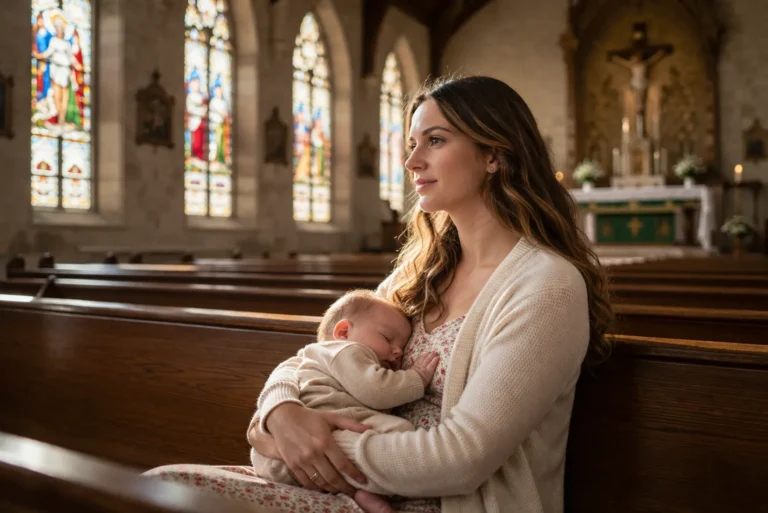
There is however one other fundamental difference between Thomas and the other ten and that is that Thomas was not there on that first Sunday evening. Does that matter? Actually I think John is telling us that it does and Thomas was getting his just deserts. The clue is in the day. Sunday, the day of resurrection was and is, for early Christians and for us, the day of worship. Thomas, for whatever reason, had not met with the first Christians that first Easter Day. I’m sure he had a perfectly good explanation, but Thomas had missed Church.
Do you need to go to Church to be a Christian? Well no. But if you want your faith to make a difference to your life, actually it’s pretty vital to meet with other Christians and to meet the risen Lord. And that’s what Thomas didn’t do. So the risen Christ didn’t affect his life until the following Sunday evening.
The fascinating thing about those disciples is that their community, their Church wasn’t a retreat from the unfairnesses of the world. A safe place where the cruel truths of the Roman Empire couldn’t reach them. Rather it was a launch pad for challenging and changing that same unfair world. They started by telling Thomas and worked outwards powered by the dynamo of Jesus’ Holy Spirit. All too often Christians view church as a sort of sanctuary to escape from the world rather than a ferment of Christian truths to challenge and change it Would you call St Swithun’s a ferment? Or a safe place? And can it be both. And in which direction does it need most work to become more like it? And how are we going to look to Jesus to do that? Listen in to discover!
Because that’s why Jesus’ wounds are so important. In my weaker moments I find Jesus’s wounds being talked about after the resurrection a little bit offensive. After all he renewed, alive, perfect. And yet his hands have the mark of the nails. His side is bleeding from the soldier’s spear. His feet look as if they’d struggle to get a comfortable pair of shoes and rather need bandaging. How is Jesus perfect when he’s still wounded? Is God satisfied with second best?
That’s just the point. Jesus is alive. His death has conquered the power of sin and his resurrection has conquered the power of death. But the job isn’t finished yet and God is not satisfied with second best. That’s why he is still so deeply immersed with the unfair and dangerous world with his risen glorious Messiah, his Son Jesus Christ, the risen and wounded Lord.
Jesus has not merely escaped to the safe environs of a spiritual paradise of heaven. He is still present in the pain and suffering of so much of the world and he will remain so until it is all transformed and renewed and fully part of the Kingdom of God. And we know that’s true because he’s still wounded. He will not heal until the world heals, and wars cease, and the refugee is accepted and housed and creation is not continually being destroyed by selfish Europeans and Americans. And maybe Thomas eventually seeing those wounds and identifying with them in his own doubt and disbelief, enabled them to heal a little bit more and that was what enabled Thomas to exclaim, ‘My Lord and my God!’? He saw them within the Church’s worship on that second Sunday evening when he focussed on Jesus instead of his own self-absorbed introspection.
If, and when, you and I wonder how a good God can allow such terrible things to go on in the world, we are unlikely to get much satisfaction if we keep the focus on our own doubts and inability to change rather than on the risen wounded Jesus. We’re going down a cul-de-sac towards stagnation and despair rather than emerging full of the breath of the Holy Spirit expecting the risen Jesus to meet us in the pain of the world he came to save.
I think there are two key challenges for every thinking Christian here.
The first is to make sure we are in regular touch with the worshipping community. Church on Sunday matters. It mattered to Thomas. It matters to us. Because it is here first and foremost that we meet the risen Jesus in the Word, in communion, in our wounded brothers and sisters in Christ. Miss it at your peril.
If you are doubting whether it makes much difference, look at the example of Thomas and remember that it does!
Second, look at the wider world as a challenge which Christ is going to transform rather than as a threat from which to hide. Unless you and I have faith in Christ from where else can we find hope? Clearly not from other human beings or from ourselves. Without Jesus the world is doomed. With Jesus there is a sure plan.
What part is God calling you and us here at St Swithun’s in that grand wounded healing Christ centred plan?