References: John 9; Matthew 23:37; Luke 13:34; Hosea 13:8

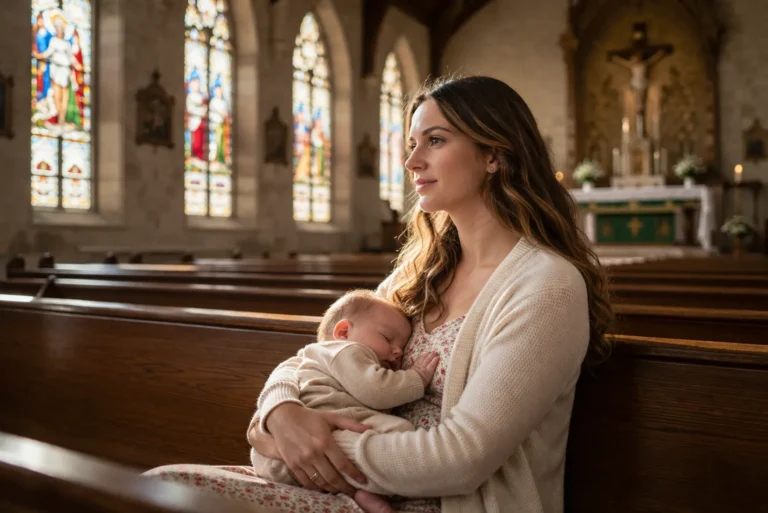
Today is mothering Sunday and I suspect that it is a day which each of us will be experiencing quite differently.
For some it is a day of great joy in which people celebrate and thank their own mothers and perhaps also have their own motherhood celebrated. Gifts to mothers will have been given and received. But I think, many people today will be experiencing a kaleidoscope of emotions. I think there are lots of ways in which our society is really not very good at talking about the more difficult and painful issues and experiences relating to motherhood and maternity.
Motherhood it seems to me often gets held up and idealised in a way that all of our lived experiences will inevitably fall short of.
Mothering Sunday can also be a really difficult day, for those whose mothers have died or for mothers whose children have died. For people who never knew their mothers. For women who would like to be mothers but who are not, for whatever reason, or for those whose relationships with their own mother or their own children are strained.
Mothering Sunday can bring up all sorts of felling’s of inadequacy.
Our societal norms and assumptions about mothers and motherhood which we see reflected in the commercialised Mother’s Day Asil at the supermarket really don’t seem to match up to the lived reality.
So now to the question that probably should be the focus of my sermon, where is God in all of this?
On Mothering Sunday I wonder how comfortable we are with thinking of God as mother? We know Jesus often refers to God as Father, or in Hebrew abba (which some commentators suggest is actually closer to the word daddy) but I would suggest that maternal images of God are present in scripture too. In both Mathew and Luke Jesus talks about Gods desire to gather her children like a mother hen does, in Hosea God is described as an angry mother bear protecting her cubs. I also am inclined to think that the whole language you may have heard about being born again or born of the spirit is quite a maternal metaphor. There is also a strong tradition through Christian history of identifying God as Mother, the medieval mystic Julian of Norwich for instance wrote that “As truly as God is our Father, so truly God is our Mother.”
But if God is our mother, then this mothering Sunday (and every day in fact) I think God does what God typically does and flips the script a bit. As whilst on mothering Sunday gifts are typically given to mothers, in the case of God our Mother, God is the one who gives gifts to us.
In our gospel reading today we meet a man who had been blind since birth. Now the first question that the disciples have about this man is “who sinned, this man or his parents, that he was born blind?” they are really swift to move straight to judgement. The man’s disability they think has to be someone’s fault, the result of sin.
But Jesus rejects this and without any judgement and without the man having to do anything Jesus smears some mud on his eyes and tells him to wash in the nearby pool and then miraculously the man is able to see!
It is quite striking that there isn’t actually anything that the man had to do to earn his healing. But though out the bible that seems to be the way that the love of God works. God’s love is a gift that is freely given, you don’t earn it you just live in response to it. So often it can be tempting to think that as Christians we should try to get closer to God. When in fact there is no spiritual ladder that we can climb, it is God who is the one who comes closer to us. we see this so clearly in the incarnation when God as Jesus came and lived among us as a human being. But this can be quite a difficult thing to accept especially as we have all grown up in a culture that is always telling us that we are not good enough.
I don’t know about you but in my head there exists an ideal version of Jodie, she is much tidier than I am, she thinks a little bit more before she speaks, she is much mor physically fit than me and for some reason she is also fluent in French and can ride a unicycle! And that constant distance between my actual self and my ideal self only serves to remind me of all of my flaws and failings, it gets a bit exhausting. And in practice I can’t ever become this ideal version of myself because it’s always a moving target, even if I do learn to unicycle I will probably then want to be able to juggle whilst doing it! So this ideal version of myself is a lie, my ideal self doesn’t exist. And actually the self that God has a relationship with, the person that God loves is my actual self not my ideal self.
God isn’t waiting for you to become a better version of yourself to love you. So often we are too busy trying to earn what God has already freely given to us.
So this Mothering Sunday, wherever you find yourself on the kaliascope of emotions that you may feel today, whatever gifts you may or may not have given and received hope that you receive the free gift of love that God our mother has given to each of us. and remember that this gift from God our mother is not for the perfect person that you wish you would be or the perfect person that you feel pressure from society to be but for the actual person that you are right now.
References and further reading
- Biblical references (John 9; Matthew 23:37; Luke 13:34; Hosea 13:8)
- Nadia Bolz-Weber, Shameless: A Sexual Reformation.
The reflection on the difference between our “ideal self” and our “actual self”, and the idea that the self that God loves is our actual self, is lifted from Bolz-Weber’s discussion of grace and self-acceptance in this book. - Julian of Norwich, Revelations of Divine Love.
Source of the quotation: “As truly as God is our Father, so truly God is our Mother.” - Teresa Kim Pecinovsky, Mother God.
A beautifully illustrated children’s book exploring maternal images for God found in scripture. There is also an accompanying scripture guide which can be downloaded here https://tkpcreates.com/home/